
Night Changes Everything
The strongest night images don’t just document light, they shape it.

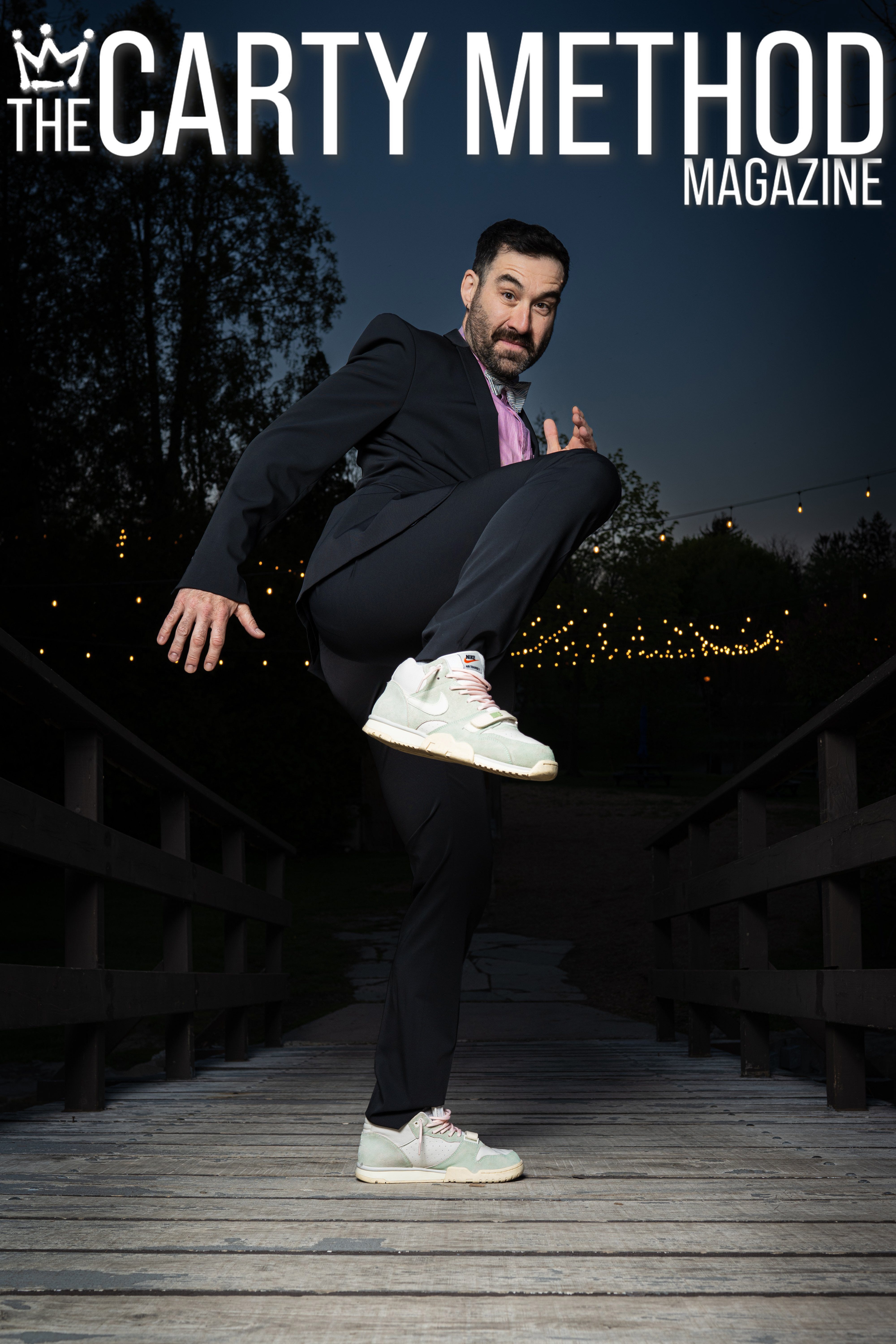
Night photography changes the way photographers see.
Light becomes selective.
Timing becomes critical.
Small mistakes become obvious very quickly.
This week’s assignment challenged photographers to work within those limitations and use darkness as part of the image instead of something to overcome.
Some submissions chased brightness.
The strongest ones understood atmosphere.
For this assignment, photographers were asked to create images within their niche after dark.
They used ambient light, artificial light, or a combination of both to shape mood and attention.
Street lamps.
Neon spill.
Headlights.
Window glow.
The goal wasn’t simply to shoot at night.
It was to make the darkness feel intentional.
At night, photographers stop relying on light being available and start deciding where it matters most.
Why This Matters
Night photography forces photographers to become more aware of every decision they make.
Exposure.
Color balance.
Light placement.
Movement.
Atmosphere.
Everything becomes more noticeable in low light conditions.
Assignments like this strengthen technical control while also pushing photographers toward more cinematic and emotionally driven storytelling.
Because after dark, light isn’t just illumination.
It becomes part of the narrative.
Assignment Brief
At the end of each review session, CARTY delivers a focused brief, outlining exactly what shooters must create for the following week.
For this assignment, members were challenged to create an image that highlights their specialty at night.
Participants were encouraged to use ambient and/or artificial light sources to shape their subject while demonstrating technical control, creativity, and atmosphere in low light conditions.
The objective wasn’t simply visibility.
It was mood, intention, and control.
One thing stood out immediately this week:
The strongest night images understood restraint.
Instead of overpowering the darkness, they used it selectively.
Thus, guiding attention exactly where it needed to go.
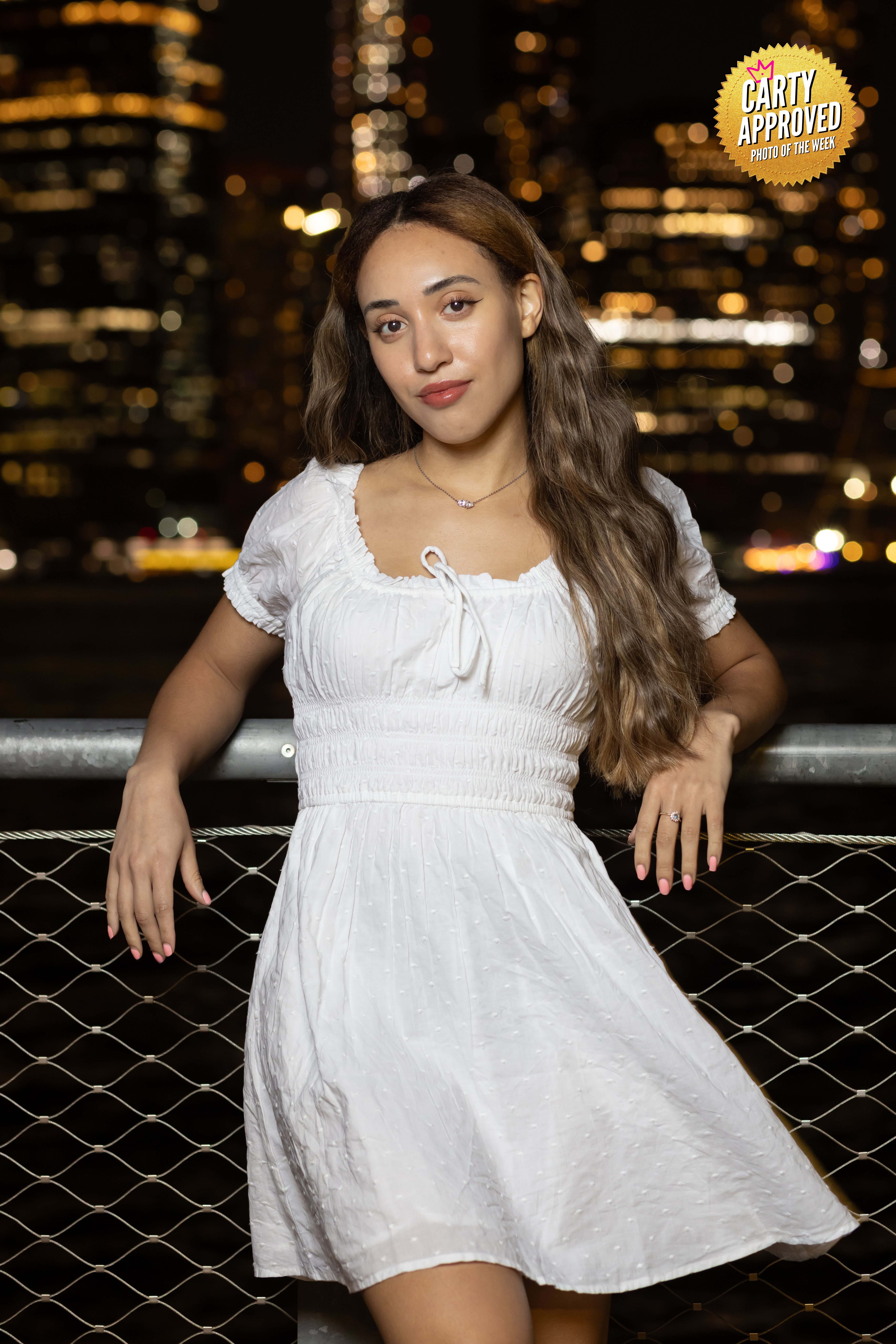
Ozzy Stewart
What first drew your attention to this scene or subject at night?
What drew me in first was the balance between her calm presence and the energy of the city behind her.
The lights in the background created this soft atmosphere that immediately felt cinematic.
I wanted to keep that feeling while making sure she still felt grounded and natural within the frame.
How did you decide which light sources to embrace and which to minimize?
I treated the city lights more like atmosphere than the main subject.
I wanted them to add depth and mood without becoming distracting.
My focus was shaping the light on her in a clean and intentional way while still allowing the environment to exist naturally around her.
What technical challenge became most important to solve during this shoot?
The biggest challenge was balancing the exposure between the subject and the city lights.
I wanted to keep detail and softness in the background while still making her stand out naturally.
Finding that balance without making the lighting feel too artificial was the main focus.
How did darkness or shadow contribute to the mood of the final image?
The shadows gave the image space and helped simplify the frame.
Instead of revealing everything, the darkness allowed the light to feel more intentional.
I think that restraint helped create a quieter and more intimate mood.
Was there a photographer, film, campaign, or reference image that influenced your approach to lighting or atmosphere? What did you study, and how did you reinterpret those ideas through your own style?
I’m inspired by editorial and cinematic portrait work that uses light in a quieter, more natural way.
I study photographers and films where the subject feels connected to the environment instead of completely separated from it.
With my own work, I try to balance refinement with authenticity.
I want the image to feel thoughtful and cinematic, but still comfortable, honest, and real to the person in front of the camera.
Social Media Handles:
Website: ozzystewart.com
Instagram: ozzy.stewart
Substack: Between Light & Shadow by Ozzy Stewart
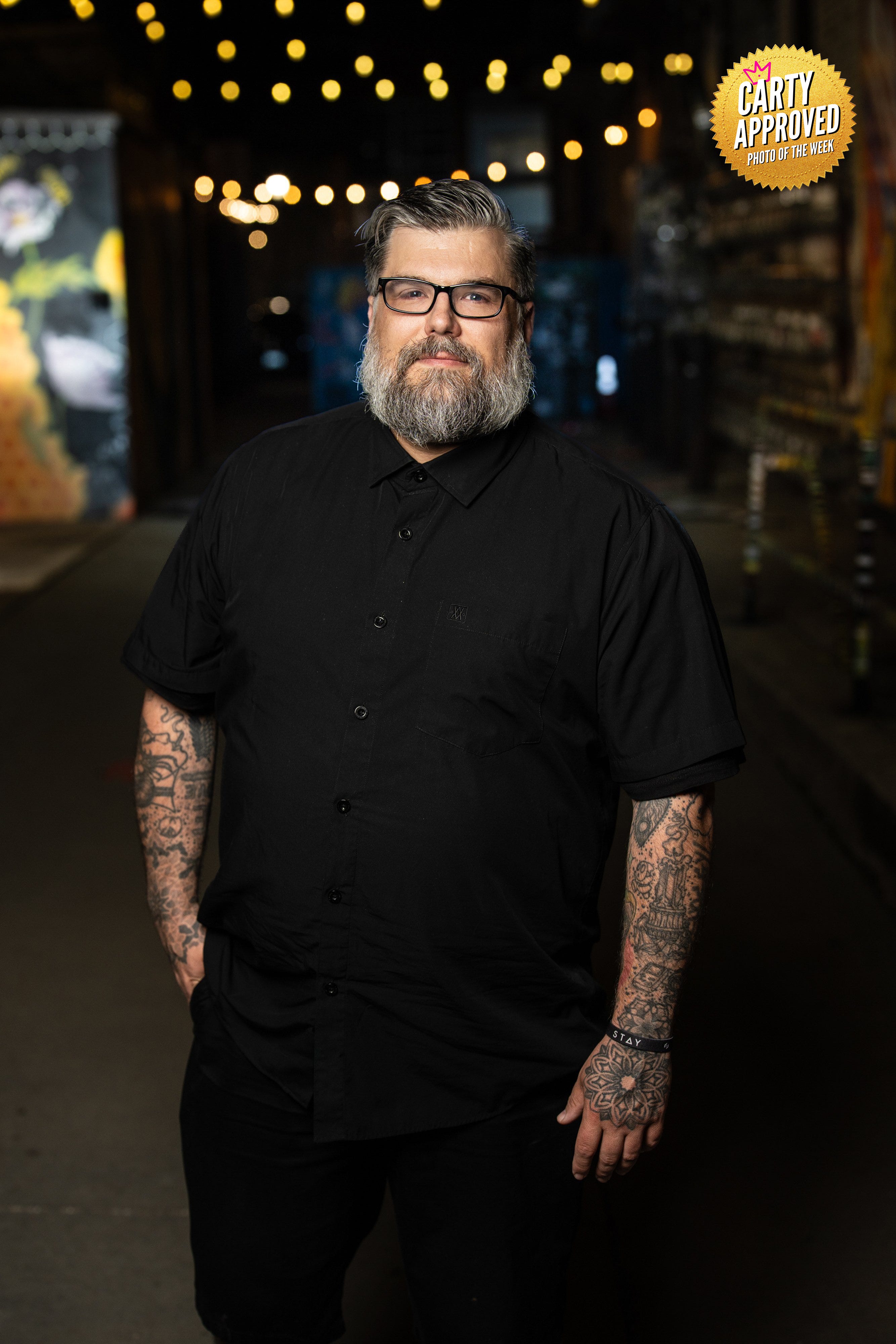
Jim Sinicki
What first drew your attention to this scene or subject at night?
I knew I wanted to shoot an image with layers when it came to this challenge.
I wanted something that told a story and wasn’t forcing the viewer to look into the void.
So I called my buddy Ryan, who is the director of Milwaukee’s East Side Improvement District and asked if he wanted to shoot a portrait at one of the artistic hang outs he’s helped curate over the past few years.
How did you decide which light sources to embrace and which to minimize?
I wanted to incorporate some of the art work that this spot is known for, so I threw a light on a mural over his right right shoulder.
To me that was the most important piece, a portrait has to have a reason, and I always thought scene and location play as important of a character as the main subject... otherwise why are you shooting there?
I also wanted to add in a little texture to the right hand side of the image so it didn’t feel too heavy on one side.
In order to do that I put another light to fill in some of the gas meters along the wall.
It wasn’t enough to tell what they were, but enough to give the viewer a feel.
What technical challenge became most important to solve during this shoot?
I was worried about keeping enough light not just on my subject but the scene all around.
In order to do that I shot the image a little more wide open than I typically would like, I don’t like shooting lower than f4 when it comes to portraits for the most part, but I decided to play it safe on this one just to get a little more environment into the image.
How did darkness or shadow contribute to the mood of the final image?
I’m a photographer who loves to shoot dark.
In fact most of my studio shots are heavy blacks and built off shadows, this was a lot of fun to shoot this dark on a bigger scale.
Was there a photographer, film, campaign, or reference image that influenced your approach to lighting or atmosphere? What did you study, and how did you reinterpret those ideas through your own style?
I can’t talk about shooting dark and building shadows and light without mentioning one of my biggest influences, Robert Powell.
He’s a local photographer who took me under his wing when I first started really getting into lighting and studio work, he taught me good photographers build light, great photographers build shadow.
That’s really been the mindset for a lot of my work.
Social Media Handles:
Website: charliejamesphoto.com
Instagram: charlie_james_photo
Substack: Charlie James Photo
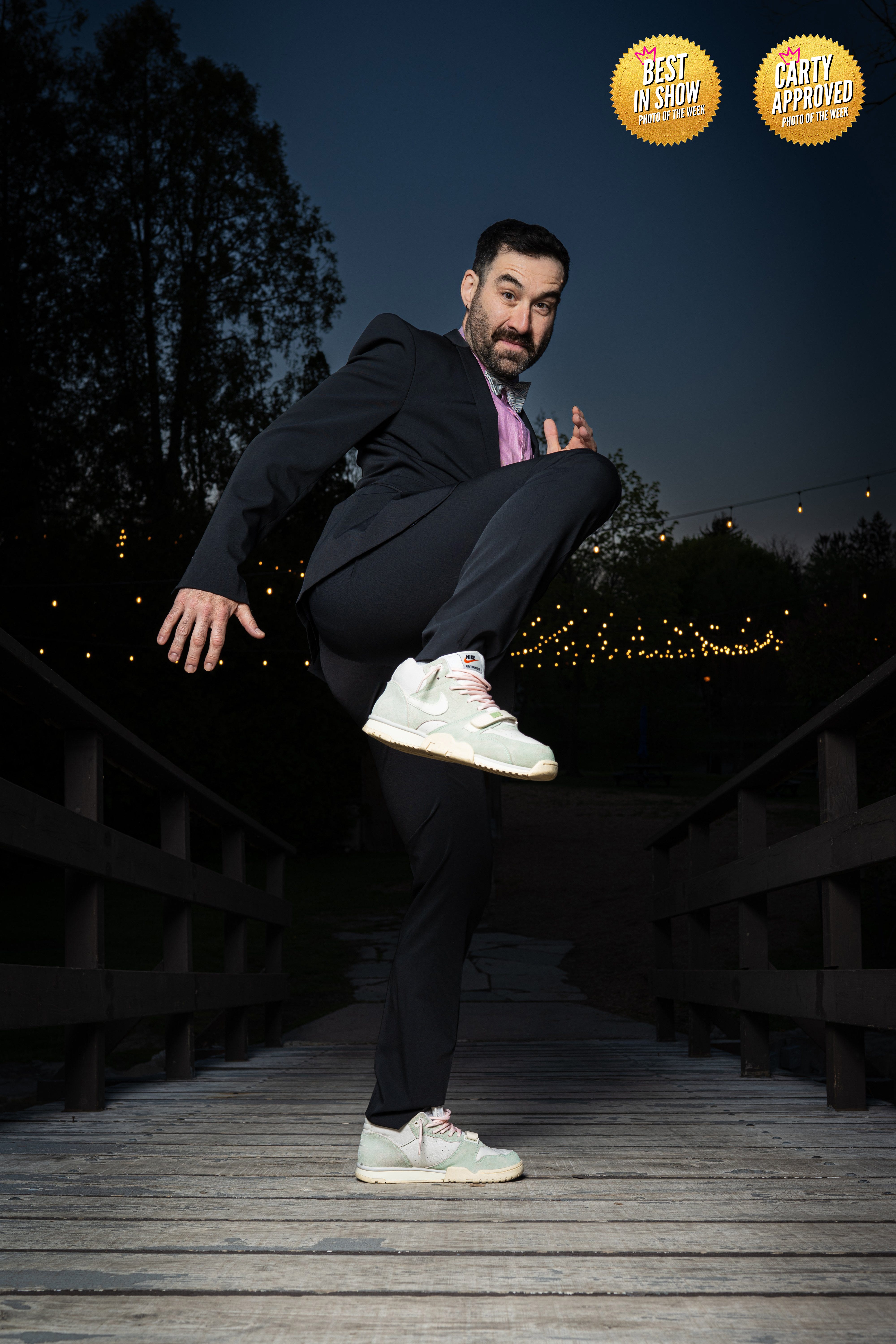
Sonny Warren
What first drew your attention to this scene or subject at night?
I was drawn to the depth provided by the string lights and the architecture of the bridge.
How did you decide which light sources to embrace and which to minimize?
I knew I’d be using flash so I wanted the subject and path detail to pop but just keep a hint of skyline and the warmth of the string lights provided depth.
What technical challenge became most important to solve during this shoot?
Getting the timing right. I wanted right after golden hour but not too full dark so nailing the time was paramount.
How did darkness or shadow contribute to the mood of the final image?
I’m really give depth to the scene but also isolated the subject in a fun but dramatic way.
Was there a photographer, film, campaign, or reference image that influenced your approach to lighting or atmosphere? What did you study, and how did you reinterpret those ideas through your own style?
I’m always looking at Jeff Lipsky for inspiration when I shoot lifestyle stuff
Social Media Handles:
Website: sonnywarrenphoto.com
Instagram: sonnywarrenphoto
Professional feedback will change your reality. Joining Portfolio Lab is the only way.
👉🏾 Carty a Pro Photographer, Director, and Educator based in Toronto, CA.
His goal is to educate and connect a global network of visual creators.
👉🏾 Masterclass Level Photography Business Education from a 36yr Pro 👈🏾 on YouTube
See work at 👉🏾 SteveCarty.com
Work with him 👉🏾 TheCartyMethod.com
Subscribe to The Carty Method Magazine to see the best new photographers from all over the world level up right before your eyes. Weekly photographer transformations are happening right now.
Become a smarter photographer in 5 minutes a week by Subscribing to CARTY on The Carty Method - Substack.
Watch the replay of these photo submissions below.