
Built From Real Moments
The strongest lifestyle images feel lived in, not staged.

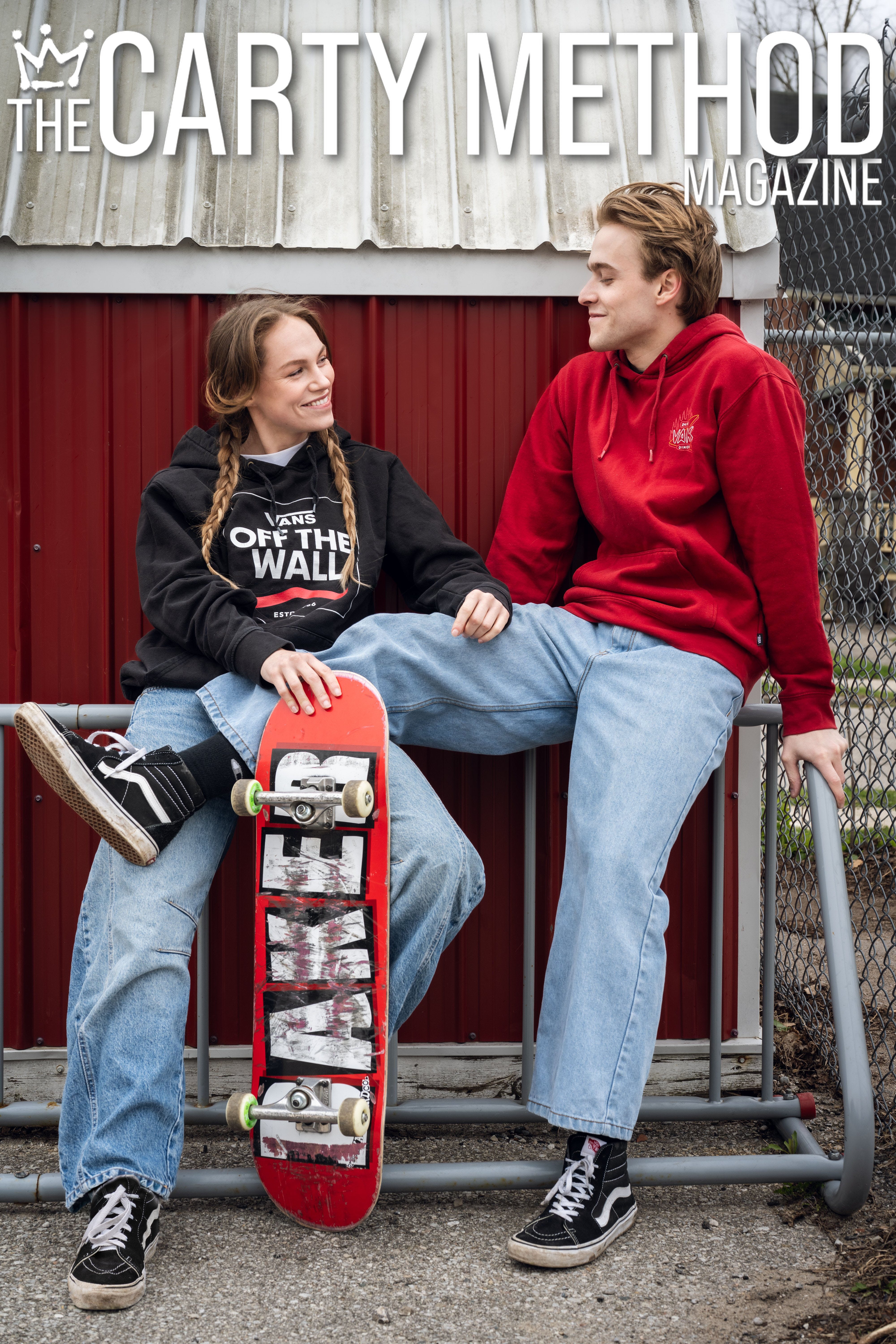
Welcome to This Week’s Edition of The Carty Method Magazine
Some lifestyle photography out there looks staged.
This week exposed the difference between placing someone in a location and actually making the environment part of the story.
Some images used the setting.
Others lived in it.
That’s the difference.
Lifestyle photography can be described as ordinary people doing ordinary things shot in a stylistic way.
This week’s assignment, Lifestyle On Location, challenged photographers to blend their personal style with recognizable environments and authentic moments.
The goal wasn’t just to show a person, place, or object.
It was to create an image that feels believable.
If your lifestyle work feels disconnected, the problem usually isn’t the subject.
It’s the relationship between the subject and the environment.
Clients are looking for images that feel authentic, relatable, and grounded in real moments.
This assignment challenged photographers to think beyond aesthetics and focus on atmosphere, connection, and story.
Because the strongest lifestyle images don’t feel staged.
They feel lived in.
Assignment Brief
At the end of each review session, CARTY delivers a focused brief, outlining exactly what shooters must create for the following week.
Here is the assignment exactly as it was shared:
“Create a single lifestyle driven image that blends your personal photographic style with a recognizable local setting.”
Participants were challenged to create images rooted in authenticity, using environment, timing, and storytelling to produce photographs clients could instantly connect with.
This week made one thing clear:
A location alone doesn’t create atmosphere.
The images that stood out used environment with intention, making the setting part of the story instead of just the backdrop.

Jim Sinicki
What made this location important to the story or feeling behind the image?
I’ve been pushing a lot more small business branding and lifestyle work this year, part of that work is getting my clients in their field and shooting lifestyle.
There’s no better way to sell your business and your expertise than by showing people what you do.
How did you approach blending your subject with the environment in a natural way?
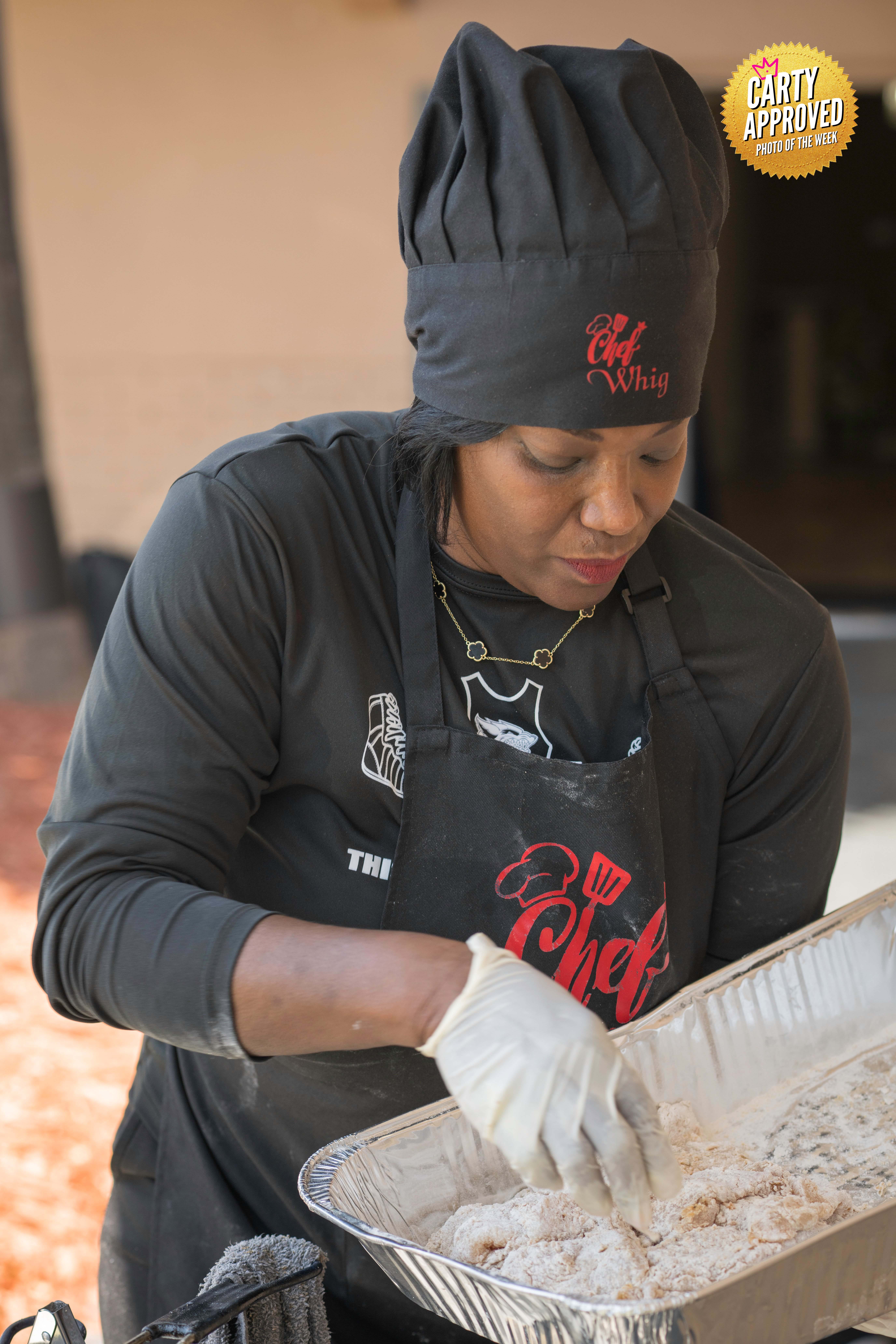
I honestly just let the client do what he does best.
I didn’t want to bother him too much, I didn’t want to get in his way.
I came up as a street photographer so I wanted to use the skills I developed in that medium and just be a fly on the wall that no one even realizes I’m there.
What decisions helped the image feel authentic rather than staged?
Like I said, I just let the client do his thing.
There’s nothing more authentic than reality.
On the back end I kept it natural, I didn’t want to edit too much, I wanted his work to be the star of the show.
What role did timing, lighting, or atmosphere play in the final result?
Really this was just capturing the moment as it happened.
We were working outside and he was between an AC unit and a house which made for nice even lighting.
Was there a photographer, campaign, or reference image that influenced your approach? What did you study, and how did you reinterpret it through your own style?
One of my favourite workshops I ever took was with Valerie Jardin.
She taught me to move quietly and to not draw attention to myself while shooting street photography which isn’t easy... I’m 6’3” 310lbs, I’m noticeable to say the least. I used her teachings to stay out of the way and lock in.
Social Media Handles:
Website: charliejamesphoto.com
Instagram: charlie_james_photo
Newsletter: @charliejamesphoto

William Sedgwick
Social Media Handles:
Website: www.sedgwick.pixpa.com
Instagram: will_sedgwick1
Michael Stimatze
What made this location important to the story or feeling behind the image?
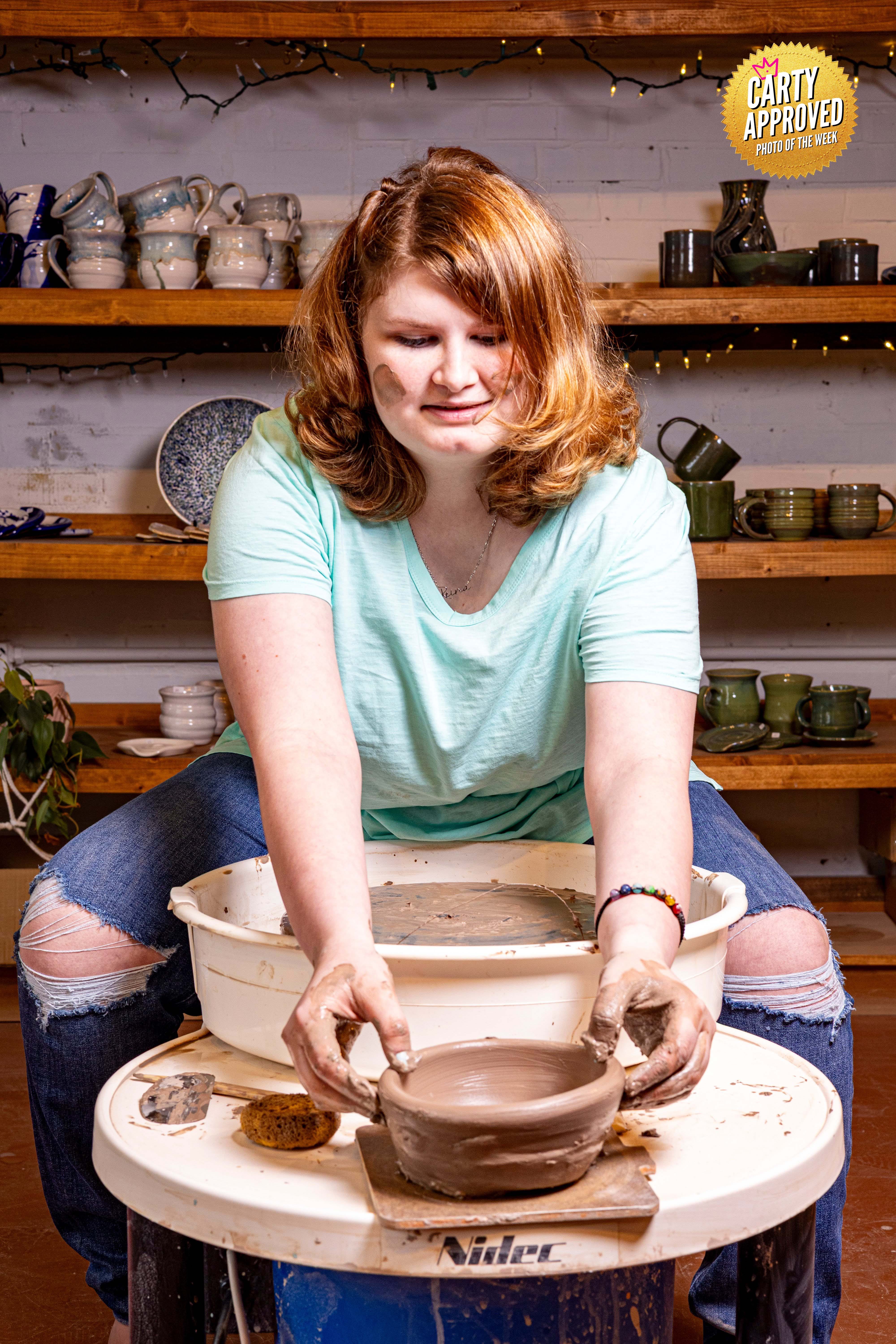
The shoot was for a Senior Class photo session.
Reina, the subject of the photo, enjoys pottery and wanted to do the shoot there.
So from the jump the location was the key to the shoot.
How did you approach blending your subject with the environment in a natural way?
The location was perfect.
We moved the pottery wheel in front of the shelf with the finished products so that it was clear that we were in a pottery shop.
The unfortunate part was the over cast day.
They have a huge floor to ceiling wall of windows that should have given us perfect natural light at the time we were shooting.
Instead I had to use strobes trying to recreate that natural light.
What decisions helped the image feel authentic rather than staged?
The location made making it feel real simple.
She actually made the bowl while I shot.
The only thing staged about the shoot was positioning the wheel correctly and added the right light.
What role did timing, lighting, or atmosphere play in the final result?
As I said the original plan was to use the natural light from the wall of windows.
Otherwise the space set the atmosphere.
This photo could not have been made anywhere else.
Was there a photographer, campaign, or reference image that influenced your approach? What did you study, and how did you reinterpret it through your own style?
My client and I used imaged we found on Pinterest as inspiration, really more for the mood than the actual photo.
The inspiration was really a product of the space and the owners of the shop.
There wasn’t one specific photographer that was referenced.
Social Media Handles:
Website: michaelstimatze.com
Instagram: mestimatze
Khaligraphy
Social Media Handles:
Website: khaligraphy.art
Instagram: khaligraphy
Steve Bourdeau
What made this location important to the story or feeling behind the image?
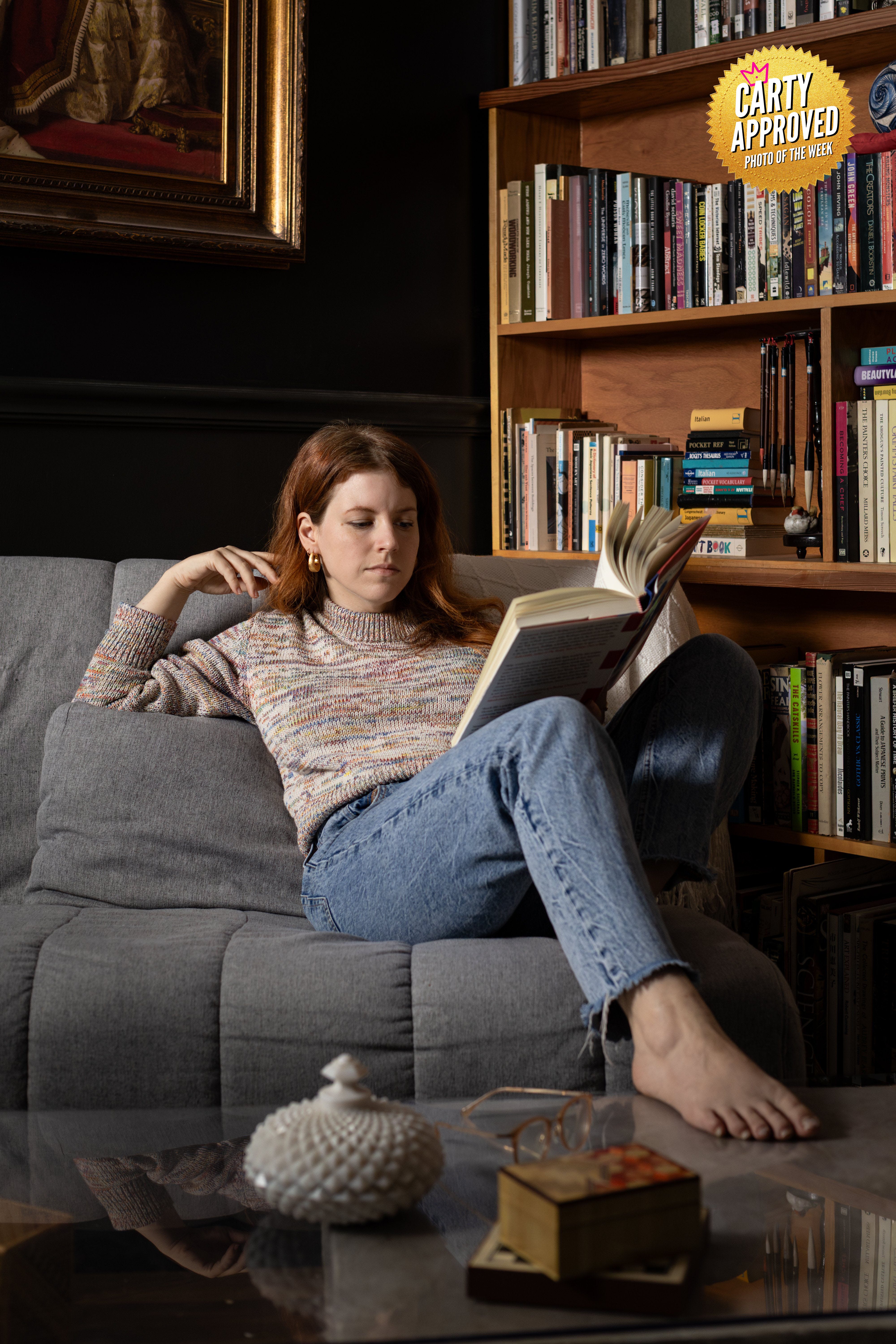
The location really sets the stage for the appreciation of the written word.
It makes sense that an author would be well read and I think that the final image resonates with writers and readers alike.
How did you approach blending your subject with the environment in a natural way?
This is the subject’s home library, so it was very easy for her to be at home.
We also landed on a fairly neutral outfit that fit the narrative and wasn’t too distracting while allowing for some separation from the rest of the scene.
What decisions helped the image feel authentic rather than staged?
A quick cleaning and rearrangement of the coffee table and a strategic placement of a throw blanket really cleaned up the image without falsely representing the personality that was already there.
The light was a crucial decision as well.
I took a battery powered studio strobe outside of the top half of a window and flagged the bottom half to give more directional shape while maintaining the look of natural window light.
Before that, it looked like light was coming from everywhere.
What role did timing, lighting, or atmosphere play in the final result?
This was a fairly controlled indoor environment, but I think if I chose to shoot when it was dark outside, the repeated flashes of the strobe may have been a nuisance to the neighbours.
Was there a photographer, campaign, or reference image that influenced your approach? What did you study, and how did you reinterpret it through your own style?
I can’t say that there was a specific photographer or image that influenced my approach.
I talk with the subject, learned about her many facets of life, and once she showed me her library, the image came to me.
Fortunately, I was able to make that image a reality.
Social Media Handles:
Website: stevebourdeau.com
Instagram: steve.bourdeau.photography
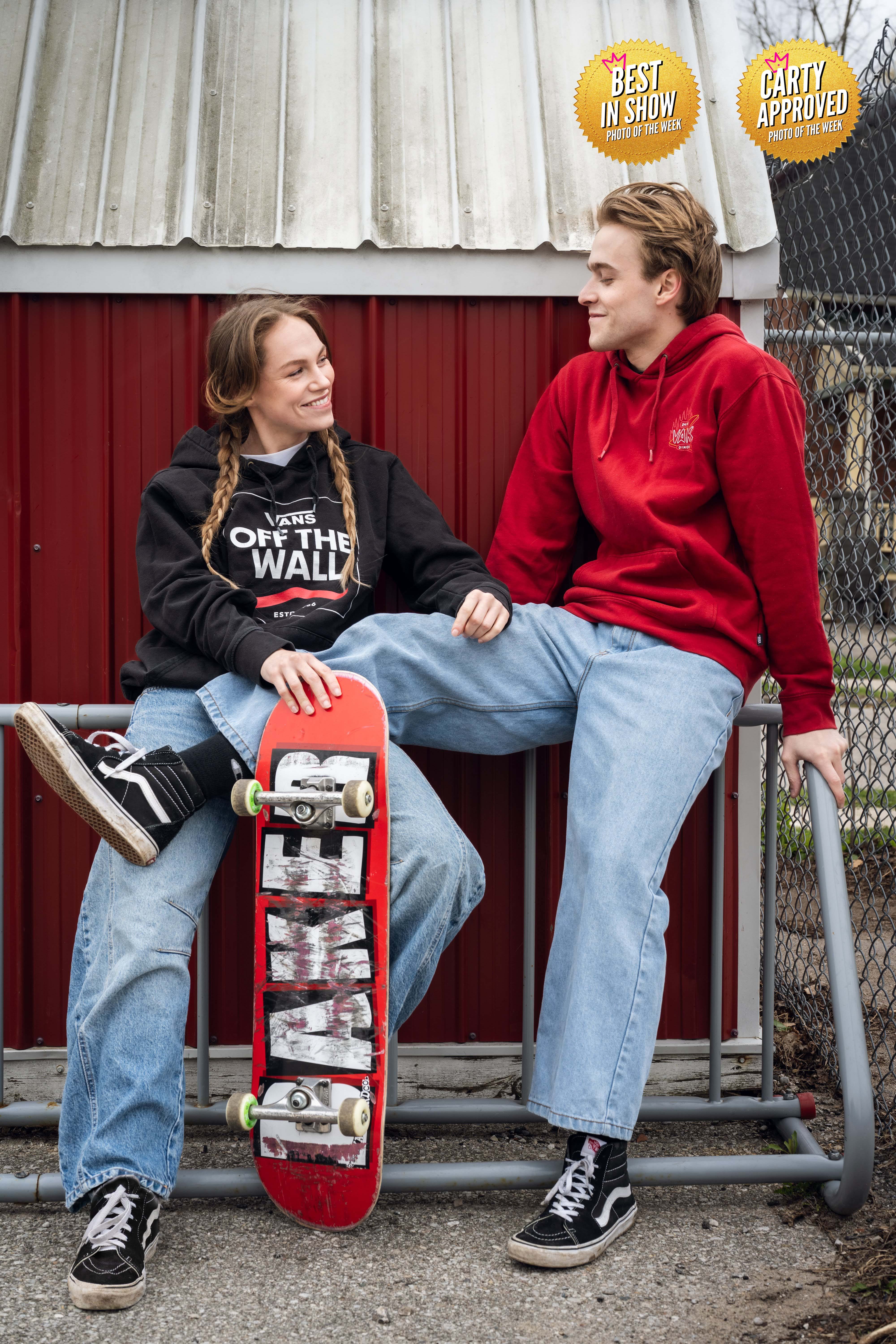
Sonny Warren
Social Media Handles:
Website: sonnywarrenphoto.com
Instagram: sonnywarrenphoto
Professional feedback will change your reality. Joining Portfolio Lab is the only way.
👉🏾 Carty a Pro Photographer, Director, and Educator based in Toronto, CA.
His goal is to educate and connect a global network of visual creators.
👉🏾 Masterclass Level Photography Business Education from a 36yr Pro 👈🏾 on YouTube
See work at 👉🏾 SteveCarty.com
Work with him 👉🏾 TheCartyMethod.com
Subscribe to The Carty Method Magazine to see the best new photographers from all over the world level up right before your eyes. Weekly photographer transformations are happening right now.
Become a smarter photographer in 5 minutes a week by Subscribing to CARTY on The Carty Method - Substack.
Watch the replay of these photo submissions below.